ServicesRoof Inspections
Roof Inspections in Morrisville, NC
We walk the roof, check the attic side where we can, and trace any problem back to where it actually starts. You get a free inspection and a photo report showing what we found, why it happened and what, if anything, your home needs next.
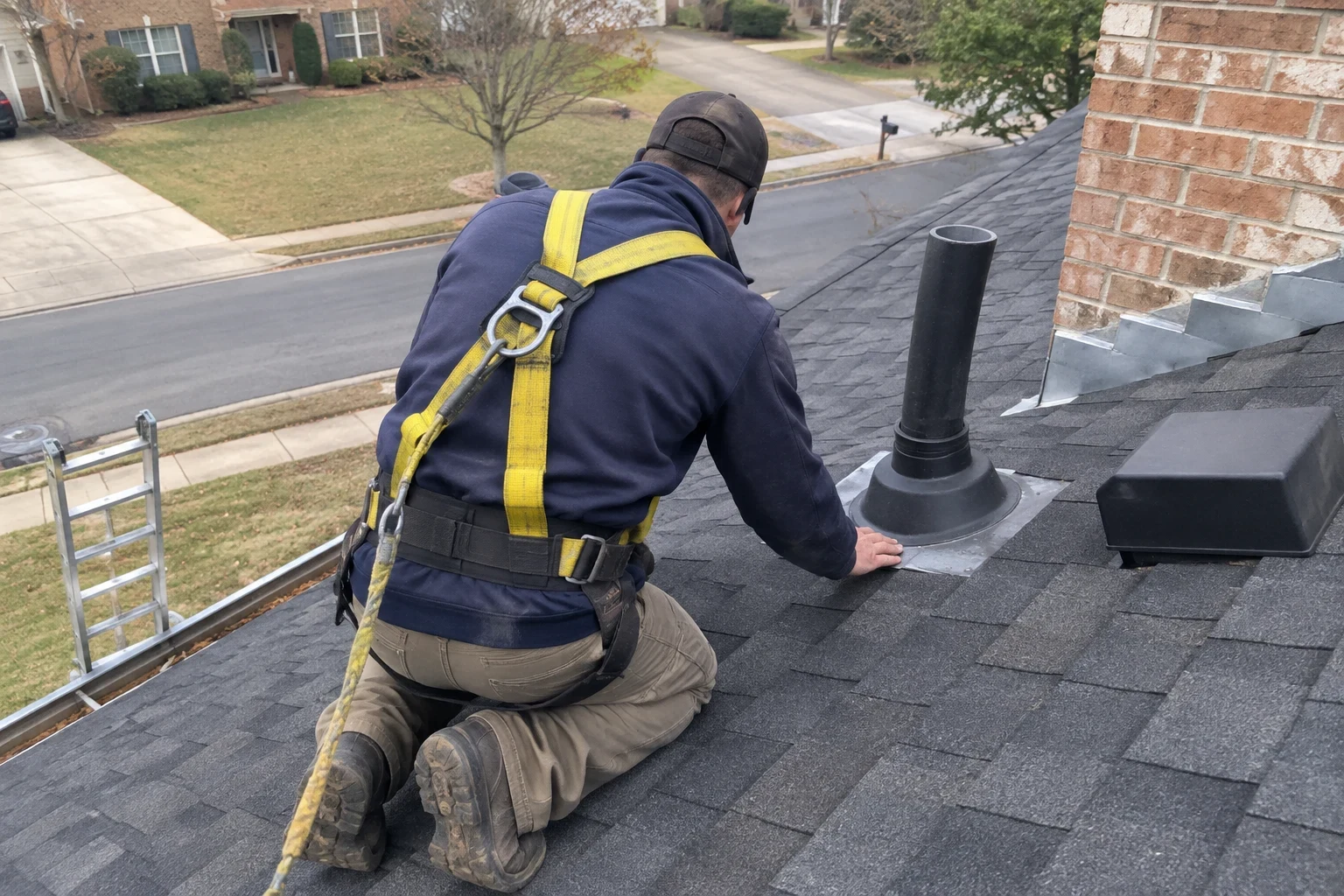
An inspection that starts with the cause
A stain on the ceiling rarely sits under the spot where water gets in. Water runs along decking and rafters before it shows, so a fix aimed at the stain often misses. We start from the symptom and work back to the source: a lifted flashing, a split pipe boot, a nail backing out, a valley worn thin.
That work happens before anyone talks about repair or replacement. Many roofs we look at need less than the owner feared. Some need more than a patch can give. Either way, the answer comes from what we can show you in photos, not from a pitch.
Plenty of roofs around Morrisville went on during the same building years and are now at the age where architectural shingles shed granules and sealant strips let go. Knowing where yours stands lets you plan the work instead of reacting to it.
What we check on every roof
- Shingle surface and fastening
- We check for bare patches where granules have worn away, shingles creased or cracked by wind, missing pieces, popped nails and seal strips that have come loose. Most roofs begin letting water in at failures this small.
- Flashing and penetrations
- Step flashing along sidewalls, chimney flashing, pipe boots, vents and skylights each get a close look. Rubber boots harden and split in the sun, metal flashing works loose with time, and between them they cause many of the leaks we trace.
- Valleys, ridge and ventilation
- Valleys handle more water than any other part of the roof, so we check them for wear. We also weigh soffit intake against ridge exhaust, since an attic that cannot breathe bakes shingles from underneath and traps moisture.
- Attic and decking, where accessible
- With your permission we step into the attic to look for water trails, daylight, damp insulation and soft or darkened sheathing. This is often where the cause we suspected from outside is confirmed.
- Gutters and drainage
- Gutters that are clogged or sloped the wrong way can send water back under the drip edge and into the fascia boards. When drainage is feeding the problem, the report says so, and our gutters page describes the work that corrects it.
- A photo report you keep
- Each finding is photographed and labeled in plain language, along with what we recommend for it. The report is yours to share with family, a buyer or your insurance company.
Signs it is time for an inspection
A stain on a ceiling or wall
Even a dry, faded stain means water got in at some point. Finding the entry point now costs far less than replacing wet drywall and decking later.
Granules in the gutters
A layer of coarse, sandy grit at the downspouts means shingles are losing their protective surface. Some loss is normal on a new roof; steady loss on an older one is worth a look.
Shingles lifting or missing after wind
If you spot shingles on the lawn or tabs flipping up, the sealant has let go. After a hard storm, our storm damage repair page explains how we document that kind of damage.
A musty or damp attic
Rusty nail tips, damp insulation or a stale smell point to a slow leak or poor ventilation. Both shorten the life of the roof if left alone.
Buying, selling or planning ahead
A roof well into its second decade, or a home about to change hands, is a good reason to get a clear picture before decisions are made.
How the inspection goes
- 1
A short phone conversation
We ask what you have noticed, roughly how old the roof is and whether it has had past repairs. Then we set a time that suits you.
- 2
From the ground, then the roof
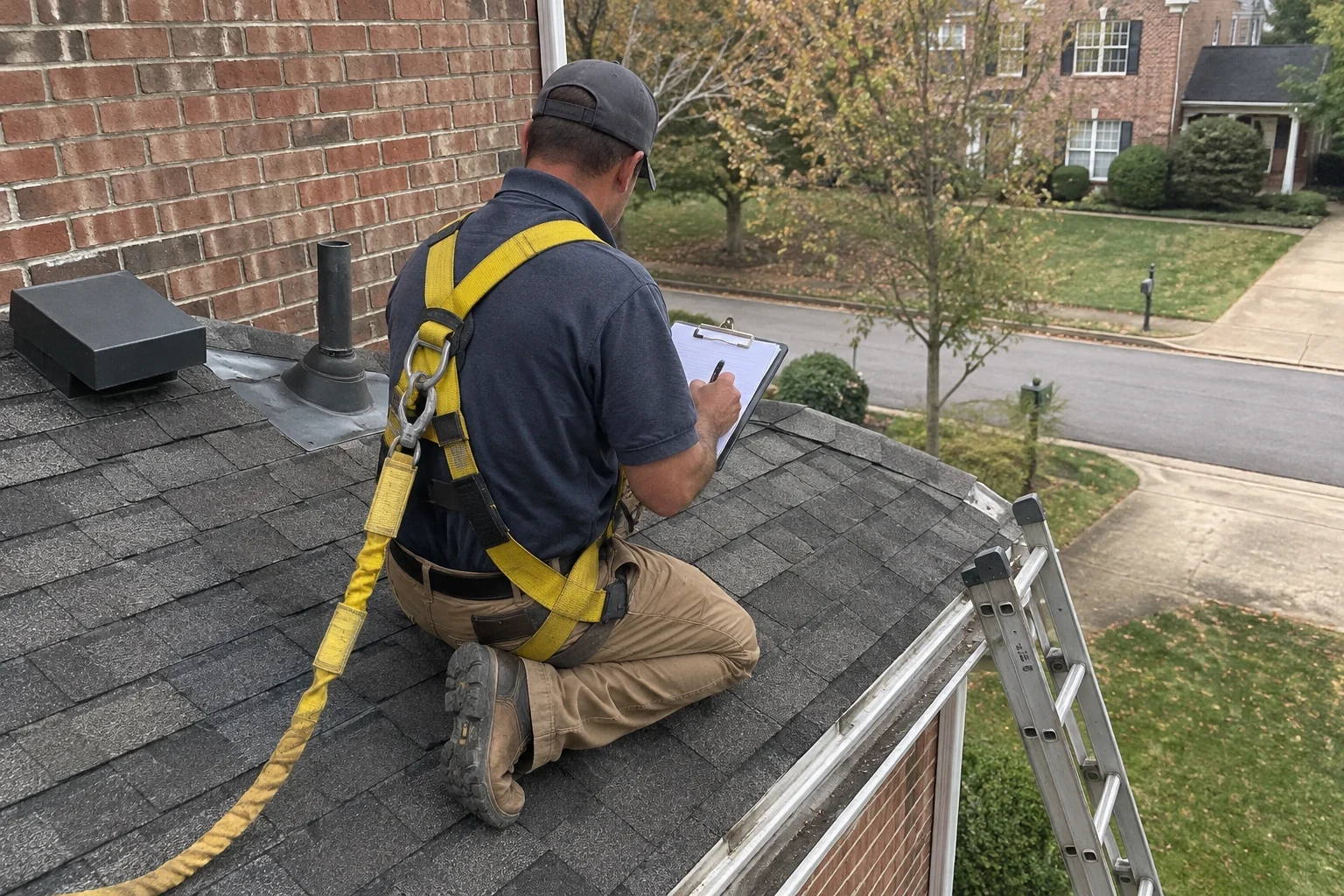
We look at the roofline from the yard first, then walk the roof if it is safe to do so, wearing soft-soled shoes and stepping carefully on older shingles. Steep or fragile sections are checked from a ladder or by camera instead.
- 3
Inside, where the symptom shows
If there is a stain, we look at it and then at the attic above it. Matching the inside evidence to what we saw outside is how we confirm the real cause.
- 4
Your findings, explained
Before we leave we walk you through what we found, and the photo report follows. Each item is marked as fine for now, worth watching, needing roof repair or pointing toward roof replacement, so you know which matters most.
What it costs and what moves the price after
The inspection is free, and nothing is owed or promised because of it. What it finds is what shapes the price of any work that follows. We explain each item in the report so the numbers make sense before you decide anything.
- Where the problem begins
- Resealing a single pipe boot is a small job. Rebuilding a worn valley or reflashing a chimney involves more material and more hours.
- Condition of the decking
- Soft or rotted sheathing has to be replaced before new shingles go down. We show you photos of any decking we flag so the reason is clear.
- Pitch, height and access
- Steeper and taller roofs need more safety setup and slower work. Tight access around trees or fences can also add time.
- Matching existing materials
- Shingle colors get discontinued and weathered roofs fade. Finding a close match for a repair can affect both cost and the finished look.
- Insurance and financing
- If the damage came from a storm, it may fall under your policy, and we can meet your adjuster and help you through the claim. Financing is also available through Acorn Finance for larger work.
Roof inspection questions
Something not covered here? (919) 346-0044
Does the inspection cost anything?
No. The visit and the photo report are free, and you owe us nothing if you decide not to go ahead with any work. When a roof is in good shape, we say so plainly.
Do I need to be home?
Not for the exterior. If there is a leak showing inside or you want the attic checked, someone will need to let us in. We can sort that out when we set the time.
Who will be on my roof?
Our own crew does the inspection. We hold a National General Contractor License (NASCLA), and we are insured for the work we do at your home.
Will the photo report be useful for an insurance claim?
Often, yes. When a storm caused the damage, the report puts dated, labeled photos in front of your insurer rather than a description over the phone. The adjuster decides what is covered, not us, but we can be there for the adjuster meeting and help you through the claim process from start to finish.
What happens if you find something?
We go over your options and give you a written estimate, explained by phone and laid out in the report. There is no rush to decide.
Is there a warranty on the work that follows?
Architectural shingle roofs we install carry our 5-year workmanship warranty. If replacement is the right call for your roof, we will explain how that coverage applies.
Know what your roof needs before you spend on it
An inspection gives you the cause, the photos and a clear next step. We will set a time that works for you.