ServicesSiding
Siding Repair and Replacement in Morrisville
We look behind the panel before we price the panel. Much siding damage starts with water entering at a roof-to-wall joint or a missing flashing, and new boards without that fix only reset the clock. We find the source, then repair or replace your siding with care.
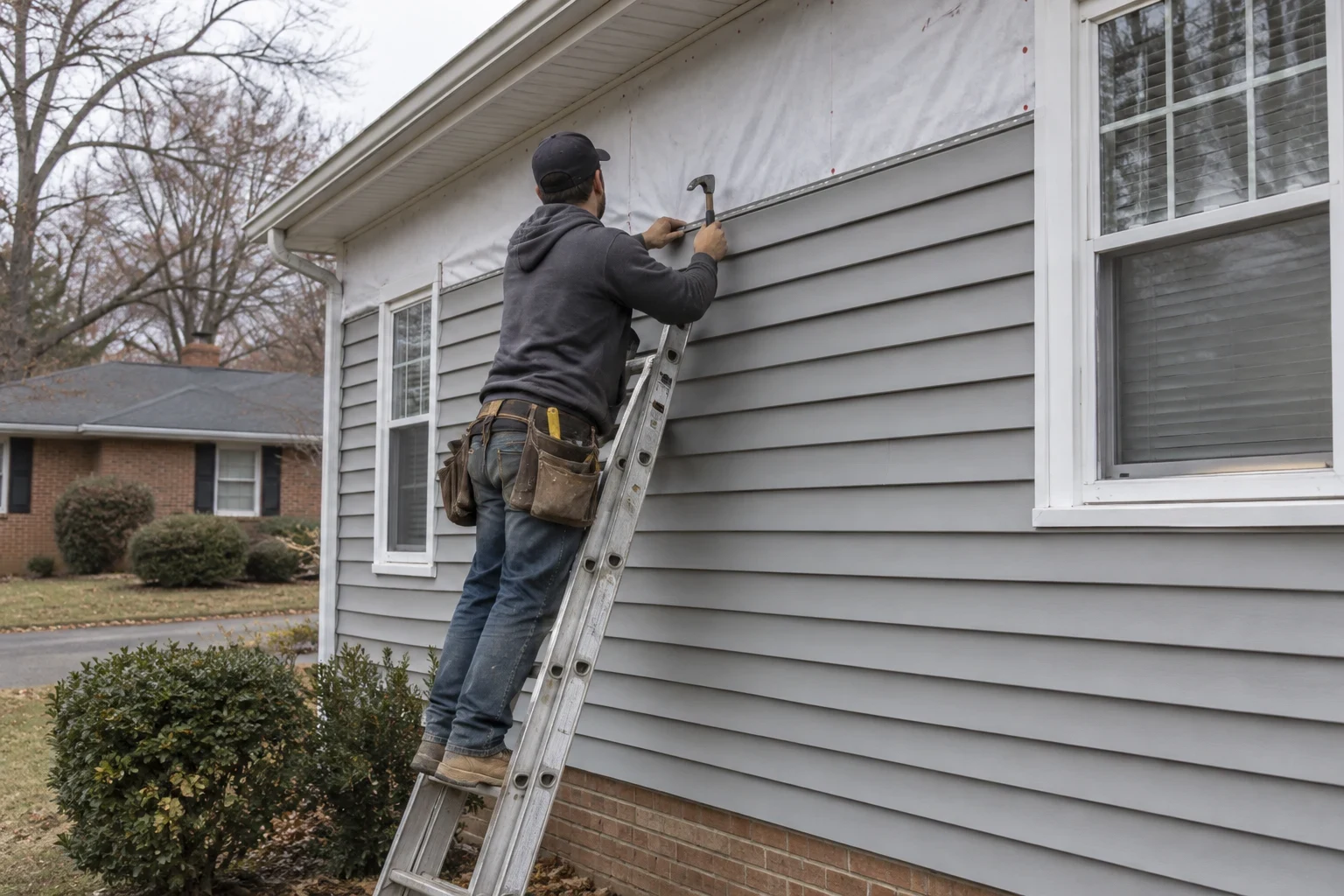
Siding work that begins with a diagnosis
Siding is the rain screen for your walls. When it cracks, warps or swells, the board you can see is usually the symptom. The cause is often a short distance away: a roof edge that dumps water against the wall, a gutter that overflows in a summer downpour, or flashing that was never installed where the roof meets the siding.
Because we are a roofing company, we look at the wall and the roof above it together. That is where a lot of siding trouble begins, and it is the part a siding-only crew may not check. Once we know why the damage happened, we can tell you plainly whether a repair will hold or whether a section, or the whole elevation, should be replaced.
We work with vinyl and fiber cement, the two materials found on most homes around Morrisville and nearby towns such as Cary and Apex. Each behaves differently, and we install each to suit how it moves and sheds water.
What our siding service includes
- Moisture tracing
- We follow stains, soft spots and swollen boards back to where the water enters. On many homes that means checking the roofline, the gutters and the flashing above the damaged area.
- Sheathing and wrap check
- Where boards come off, we inspect the house wrap and the sheathing underneath. You see photos of what we find, so you know whether the wall behind the siding is sound before any new material goes up.
- Flashing corrections
- Kick-out flashing at roof-to-wall joints and step flashing along sidewalls are small parts that do a lot of work. We add or replace them so the new siding is not taking water it was never meant to handle.
- Vinyl repair and replacement
- Vinyl expands and contracts with temperature, so we nail it to hang loose on the wall rather than pinning it tight. That is what keeps it from buckling in August heat.
- Fiber cement installation
- Fiber cement is heavier and more rigid, with specific clearances at the roofline and ground. We keep those gaps, seal cut ends as the material requires, and use factory-finished boards where they fit the job.
- Careful cleanup
- We protect plantings and walkways while we work, collect old material and fasteners, and run a magnet across the yard before we leave.
Signs your siding needs attention
Warped or wavy panels
Vinyl that bows or ripples often was nailed too tight, or is sitting near a heat source. Left alone, it can pull loose and let wind-driven rain behind it.
Swollen or soft board edges
On fiber cement or older wood-based siding, swelling at the bottom edge points to water wicking in. We check whether it is coming from above.
Stains below the roofline
Dark streaks on the wall under a roof edge usually mean water is running down the face of the siding. A missing kick-out flashing is a common reason.
Cracks, holes or missing pieces
Hail, mower debris and wind can crack or strip panels. Even a small gap gives insects and moisture a way in.
Musty smells or peeling drywall inside
When an exterior wall shows damage on the inside, water has likely been getting past the siding for a while. That calls for a look at the sheathing, not just a new panel.
What moves the cost of siding work
Every siding job is priced from what we find on your walls, not from a square-foot guess. The biggest swing usually comes from what is behind the boards. We show you the photos and explain each line before you decide, and financing is available through Acorn Finance.
Material choice
Vinyl and fiber cement differ in material cost, weight and labor. Matching an existing profile or color can also limit options on a repair.
Condition underneath
Rotted sheathing or failed house wrap adds work. We cannot always see it until boards come off, so we tell you up front how we handle what we find.
Wall height and access
Two-story gables and walls over decks or steep grades need more staging and time than a ground-level wall.
Flashing and trim corrections
Adding kick-out flashing, reworking roof-to-wall joints or replacing trim adds to the scope, but it is often the step that stops the damage from returning.
How a siding job runs
- 1
Inspection and photo report
We walk the exterior, check the roof edges above any damage, and photograph what we find. You get a clear explanation of the cause and the options.
- 2
Written scope
We write down which walls, how much material and any flashing or sheathing work needed. If the damage came from a storm, we can meet your adjuster and help you through the insurance claim process.
- 3
Removal and repair
We take off the affected siding, correct the water path, and replace damaged wrap or sheathing before anything new goes on.
- 4
Installation and walkthrough
New panels go up with proper fastening, clearances and trim. We clean up, then walk the work with you so you can see the finished wall.
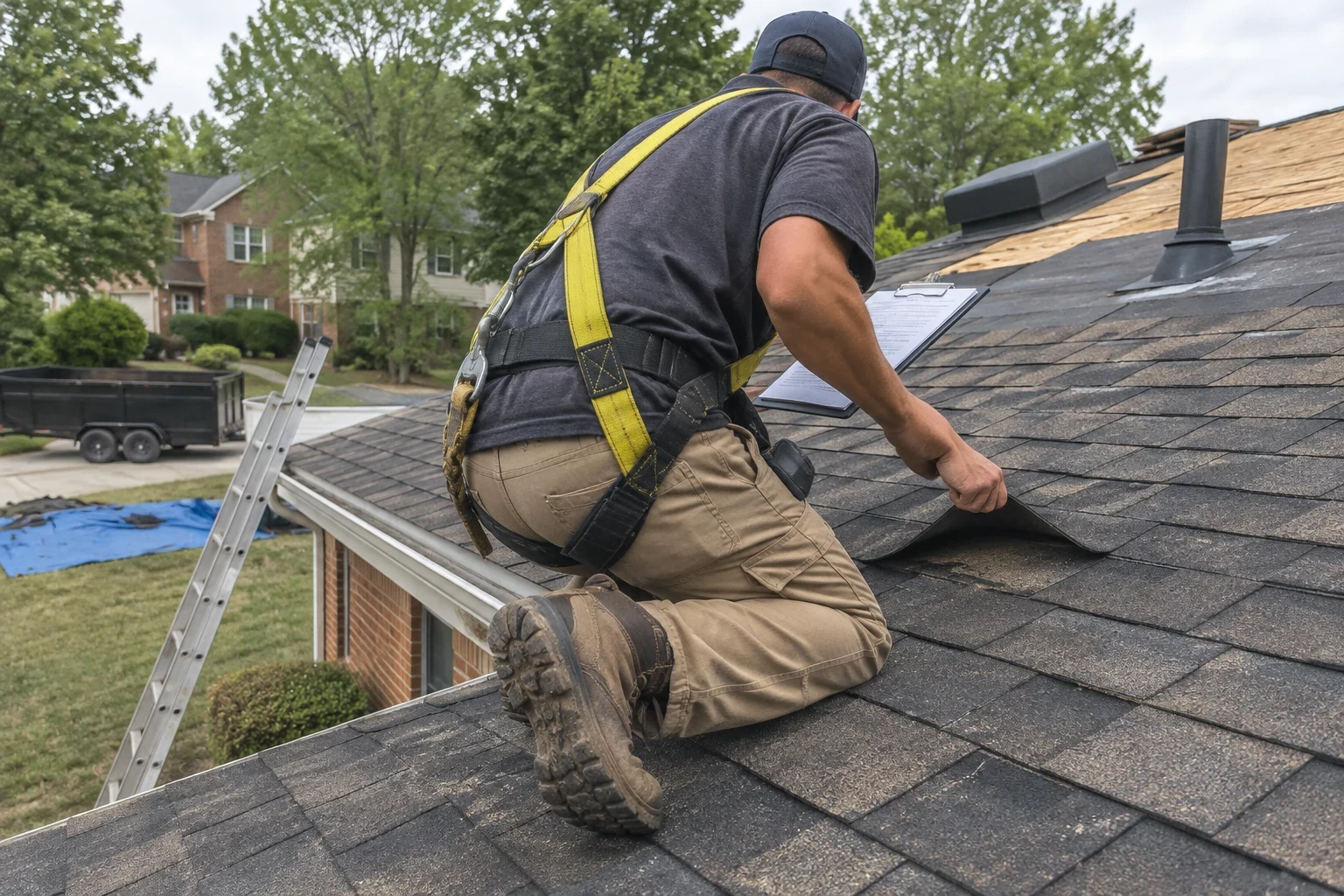
Common questions about siding
Do I need new siding on the whole wall, or just where it is damaged?
Often a partial repair is enough. If the damage is contained and we have corrected what caused it, replacing a section can hold up well. Older vinyl that has faded in the sun is the hard part, because an exact color and profile match is not always possible, so we show you the closest match before any work begins.
Why would a roofer work on my siding?
A lot of siding damage begins at the roof. Overflowing gutters, missing kick-out flashing and poorly detailed roof-to-wall joints all send water down the face of the wall. We can correct the source and the siding together, so you are not left between two trades each pointing at the other.
Will insurance cover storm damage to my siding?
Two things decide it: the wording of your policy and what actually broke the panels. Sudden events such as a hailstorm or a strong wind are commonly included, while aging boards and a leak that built up over months typically fall outside it. We document the damage with photos and can be there when your adjuster visits, though the coverage decision rests with your insurer.
What credentials do you carry for siding work?
We hold a National General Contractor License (NASCLA), and we are insured. If you would like to go over either one, just ask when you reach us by phone.
Should I choose vinyl or fiber cement?
Vinyl is light and asks for very little upkeep. Fiber cement is stiffer, stands up better to impact and fire, and keeps a sharp, clean line. We walk you through how each would perform on your walls and leave the choice to you.
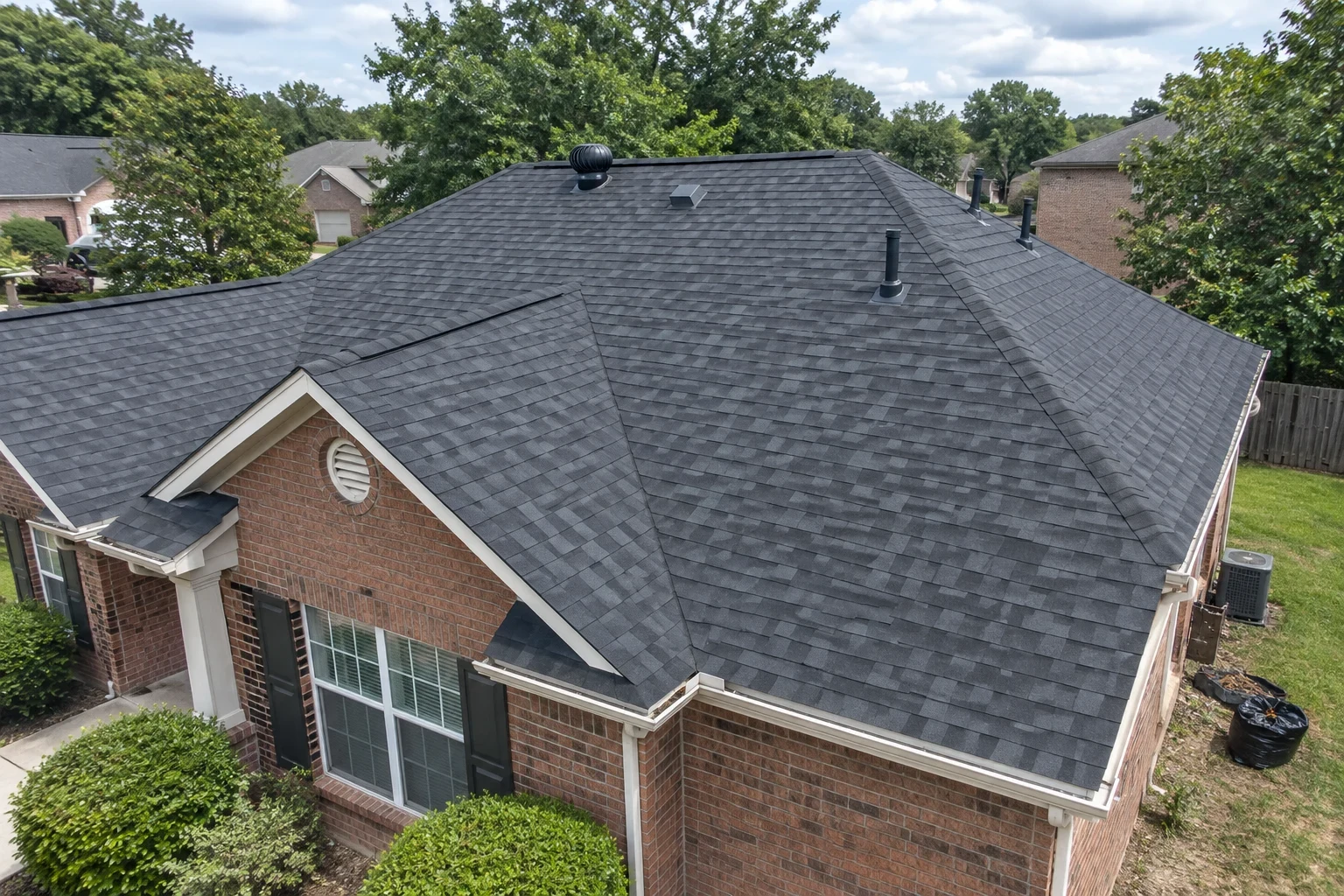
Find out what is really behind the damage
We will inspect your siding and the roof above it, then send you a photo report of what we found. There is no charge for the inspection.